
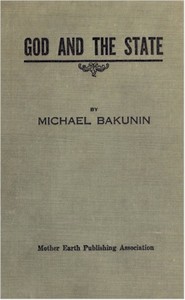
God and the State
Edition facts
Bakunin opens by drawing a sharp line between science and life. Science, he writes, 'comprehends the thought of the reality, not reality itself; the thought of life, not life.' This distinction is not merely philosophical but political: he fears that when scientists claim authority over society, they become a new priesthood, treating individuals as specimens. The passage echoes his broader anarchist critique of any centralized power, whether divine or human.
Science as Compass, Not Governor
Bakunin grants science a legitimate but limited role: it can establish general laws and serve as a 'compass of life.' Yet he insists that science 'creates nothing; it establishes and recognizes only the creations of life.' The metaphor of the compass is precise—a tool for orientation, not a source of motion. He warns that when scientists 'mingle with living creation,' their proposals become 'poor, ridiculously abstract, bloodless and lifeless,' comparing them to Wagner's homunculus in Goethe's Faust. The homunculus, a man-made artificial being, symbolizes the sterility of knowledge divorced from lived experience.
The Scientific Caste and Its Victims
Bakunin extends his critique to the social organization of science. Scientists, he argues, 'form a separate caste, in many respects analogous to the priesthood.' Their abstraction becomes a god, and 'living and real individuals are their victims.' He imagines a future where savants might 'submit living men to scientific experiments' on the social body. This is not a rejection of empirical inquiry but a warning against institutional power. The passage recalls his own experience with authoritarian systems—tsarist, religious, or revolutionary—that sacrifice individuals to abstract ideals.
Life's Primacy Over Abstraction
Bakunin repeatedly privileges the 'palpitating' reality of individual life over the 'unchangeable, impersonal, general' character of science. Life is 'wholly fugitive and temporary, but also wholly palpitating with reality and individuality, sensibility, sufferings, joys, aspirations, needs, and passions.' This language is deliberately visceral, contrasting with the coldness of scientific abstraction. He even suggests that art is 'infinitely superior' to science because it can engage with the concrete. The argument is not anti-intellectual but anti-authoritarian: knowledge must remain subordinate to the freedom and dignity of living beings.
Theology, Metaphysics, and the Same Flaw
Bakunin draws a parallel between scientists and theologians: both lack 'sense nor heart for individual and living beings.' He notes that this is 'the natural consequence of their profession.' The critique is structural, not personal. By linking science to theology, he undermines any claim that rational authority is inherently benign. The excerpt suggests that the problem lies in the role of the expert, not the content of the knowledge. This anticipates his broader anarchist argument that all hierarchies—whether divine, metaphysical, or scientific—are oppressive.
Readers should note that Bakunin's argument is embedded in a longer polemic against religion and the state. The excerpts here focus on the limits of science, but his target is any system that subordinates concrete human life to abstract principle. Pay attention to how he uses contrasts—general versus particular, permanent versus fugitive, abstract versus palpitating—to build his case. The text rewards close reading of its rhetorical structure as much as its philosophical claims.