
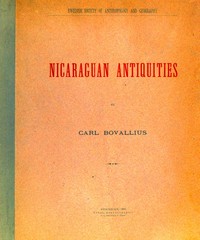
Nicaraguan Antiquities by Carl Bovallius
Forget dry, dusty museum catalogs. 'Nicaraguan Antiquities' is Carl Bovallius's travelogue, a record of his 1881-1883 expedition through Nicaragua. He wasn't sitting in a library; he was on the ground, talking to locals, hacking through vegetation, and carefully digging up what he found.
The Story
The book doesn't have a plot in the traditional sense. Instead, it follows Bovallius's journey as he systematically explores ancient sites, mainly around Lake Nicaragua and on the island of Ometepe. He describes the landscapes, the challenges of travel (think canoes and mules), and, most importantly, the artifacts. Page by page, he introduces us to intricate pottery, mysterious stone statues (often referred to as 'idols'), and the layouts of old mounds and walls. He draws everything meticulously, measures, and tries to understand what he's looking at. The 'story' is the slow, careful process of discovery itself.
Why You Should Read It
What grabbed me was the sense of immediacy. You're right there with him, feeling the excitement of uncovering a perfectly preserved pot or the frustration of a fragmentary find. This isn't a polished, modern analysis. It's raw observation, which makes it incredibly honest. You see his guesses, his confusions, and his genuine awe. He often notes where objects were found and who showed them to him, giving credit to local guides—something that wasn't always done back then. Reading it, you become aware that he's creating the first draft of a history that was, even in his time, being forgotten.
Final Verdict
This book is a niche gem, but a brilliant one. It's perfect for history buffs and armchair archaeologists who love primary sources. If you enjoy travel narratives from the age of exploration, you'll appreciate the adventure. It's also great for anyone interested in Central American cultures, as it provides a foundational, on-the-ground view. A word of caution: it's an old academic work, so some sections are lists and descriptions. But if you read between the lines, you find a compelling human story about curiosity, preservation, and the thrill of being the first to connect with a lost past.
Deborah Nguyen
1 year agoThe layout is very easy on the eyes.
Mason Lee
4 months agoVery helpful, thanks.
William Thomas
1 year agoThis is one of those stories where the storytelling feels authentic and emotionally grounded. Definitely a 5-star read.
Linda White
1 year agoI didn't expect much, but it manages to explain difficult concepts in plain English. Don't hesitate to start reading.


Margaret Miller
10 months agoGreat reference material for my coursework.