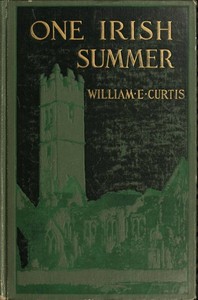
One Irish Summer by William Eleroy Curtis
Published in 1904, One Irish Summer isn't fiction. It's the collected travel dispatches of journalist William Eleroy Curtis from his trip the previous year. He journeyed from bustling Dublin to the remote western coasts, aiming to capture Ireland for his American readers at a pivotal moment in its history.
The Story
The book doesn't have a plot in the traditional sense. Instead, it follows Curtis's route. He describes the cities, the ruins, and the stunning countryside with the eye of a reporter. We meet a cast of real people: farmers, priests, innkeepers, and guides. He attends political rallies and religious festivals, tries to understand the complex land issues, and samples the local fare (with mixed reviews). The 'story' is his evolving understanding. He starts with broad generalizations but often finds them challenged by individual conversations and experiences. The narrative is his journey from being an outside observer to, gradually, a more engaged visitor.
Why You Should Read It
What makes this book special is its lack of modern polish. Curtis doesn't write for a 21st-century audience sensitive to cultural nuance. His views are a product of 1903, and that's precisely what's fascinating. You get the raw, unfiltered perspective of an intelligent outsider. His descriptions of places like the Gap of Dunloe or the Cliffs of Moher are vivid and timeless. But it's his notes on social conditions, politics, and everyday life that are truly gripping. You're not getting a historian's analyzed summary; you're getting live field notes. It requires a bit of patience for his dated attitudes, but if you can read it as a primary source—a man talking to you from the past—it's incredibly rewarding.
Final Verdict
This one is perfect for history buffs and travel writing fans who want something authentic. If you love Ireland and are curious about how it was seen just over a hundred years ago, this is a direct line to that moment. It's also great for readers who enjoy personal diaries and journals. It's not a fast-paced adventure, but a slow, thoughtful walk through a nation on the cusp of change, guided by a companion who is himself learning as he goes. You'll come away feeling like you've had a long, revealing chat with a traveler from another age.
This work has been identified as being free of known copyright restrictions. You can copy, modify, and distribute it freely.