
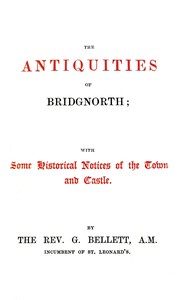
The antiquities of Bridgnorth : with some historical notices of the town and…
George Bellett's The Antiquities of Bridgnorth is less a traditional narrative and more a guided exploration. Published in the 1850s, it's Bellett's personal mission to document and explain the physical history of his hometown before it disappears. The book is structured like a walk with a deeply knowledgeable friend. He starts with the town's overall layout and its dramatic split between High Town and Low Town, then methodically examines its surviving landmarks: the castle ruins, the ancient churches, the old town walls, and even the seemingly ordinary houses on main streets.
The Story
There isn't a plot with characters in the usual sense. Instead, the 'story' is the uncovering of Bridgnorth's layered past. Bellett acts as both historian and archaeologist. He compares old maps and documents with what he sees on the ground, often noting where a written record and the physical evidence don't match up. He points out architectural features—a Norman arch here, a Saxon stone there—that reveal a building's true age. A big part of the book is his effort to trace the remnants of the town's medieval defenses and to imagine the scale and look of Bridgnorth Castle, which was largely destroyed centuries before. It's a slow, careful process of connecting dots, where every carved stone and buried foundation has a role to play.
Why You Should Read It
What makes this book special is Bellett's voice. He's not a detached academic; he's a local man with a palpable love for his subject and a touch of urgency. You can feel his frustration when he finds a historic feature neglected or, worse, being torn down. His writing makes you care about a blocked-up window or an ancient gateway because he explains why it matters. He teaches you how to look, how to read a building's biography in its bricks and mortar. It's a masterclass in local history, showing that you don't need to dig up a king's tomb to find a fascinating story—sometimes it's right there on your local high street.
Final Verdict
This is a perfect read for anyone with a curiosity about the history embedded in their own surroundings. It's ideal for local history enthusiasts, architecture fans, or people from the Shropshire area. While it's packed with detail, Bellett's conversational style keeps it accessible. It's not a flashy page-turner; it's a thoughtful, steady companion. Think of it as the bookish equivalent of a long, informative walk on a clear afternoon—you finish it feeling like you've learned to see the world a little differently.




Lisa Gonzalez
1 week agoA must-have for anyone studying this subject.