
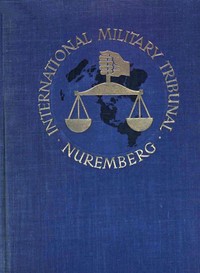
Trial of the Major War Criminals Before the International Military Tribunal,…
This isn't a book with a traditional plot. Instead, it's the official, multi-volume record of the International Military Tribunal held in Nuremberg from 1945 to 1946. The 'story' is the trial itself. After World War II, the Allied powers—the United States, Great Britain, France, and the Soviet Union—decided to put the surviving top leaders of Nazi Germany on trial. They weren't just charged with starting a war; they were charged with new, unprecedented crimes: crimes against peace, war crimes, and crimes against humanity.
The Story
The book lays out the entire legal proceeding. It starts with the prosecution presenting its case, using captured Nazi documents, films, and photographs as evidence. You then follow the defenses of the 21 major defendants, including figures like Hermann Göring, Rudolf Hess, and Albert Speer. Each gives their side, often trying to shift blame or claim they were just following orders. Finally, you read the tribunal's verdicts and the sentences, which included death penalties, prison terms, and acquittals. The narrative is built from court transcripts, evidence lists, and legal arguments.
Why You Should Read It
Reading this is a powerful, sobering experience. It removes the filter of a historian's summary and puts you directly in the room. You see the legal and moral arguments being forged in real time. The most striking thing isn't the horror of the evidence (though that is there), but the ordinary, bureaucratic language used to discuss monstrous acts. You witness defendants justifying the unjustifiable. It makes abstract concepts like 'accountability' and 'international law' feel immediate and desperately important. This is where phrases we now take for granted, like 'war crimes,' were given real teeth.
Final Verdict
This is not casual reading. It's for the reader who wants to confront history head-on, without a novelist's framing. Perfect for history buffs, students of law or political science, or anyone who has read a lot about World War II and wants to see the original source material. It's challenging, often difficult, but incredibly rewarding. You come away understanding that the trial wasn't a simple act of vengeance; it was a flawed, complicated, and groundbreaking attempt to build a system of justice for the whole world.
This masterpiece is free from copyright limitations. Share knowledge freely with the world.
George Johnson
1 year agoFrom the very first page, the content flows smoothly from one chapter to the next. A valuable addition to my collection.